
Tabisuru Makers Lab Begins: A Report from Nagahama, Shiga
Hello, everyone who has been supporting Tabisuru Makers Lab. This is Hiro Namekawa.
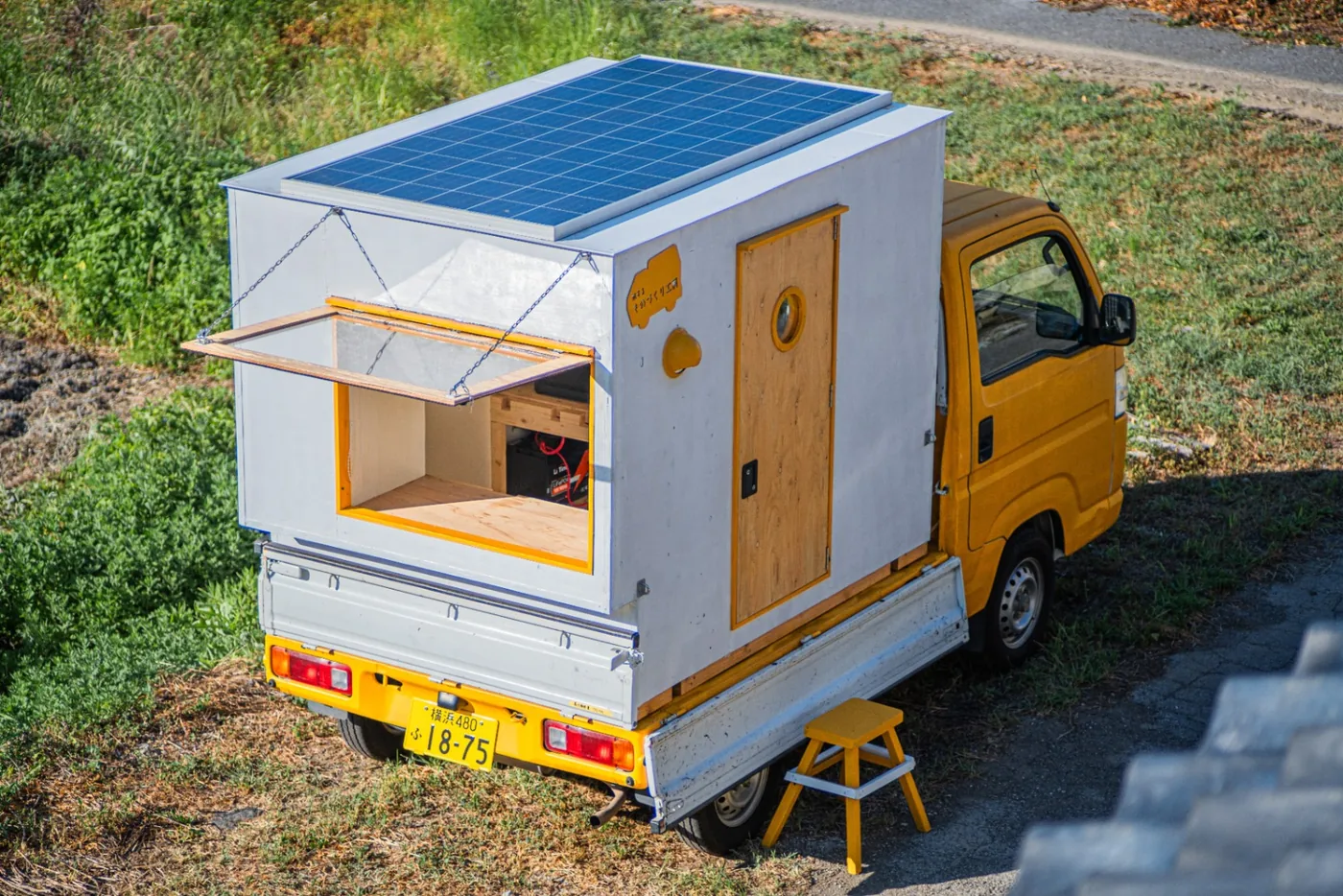
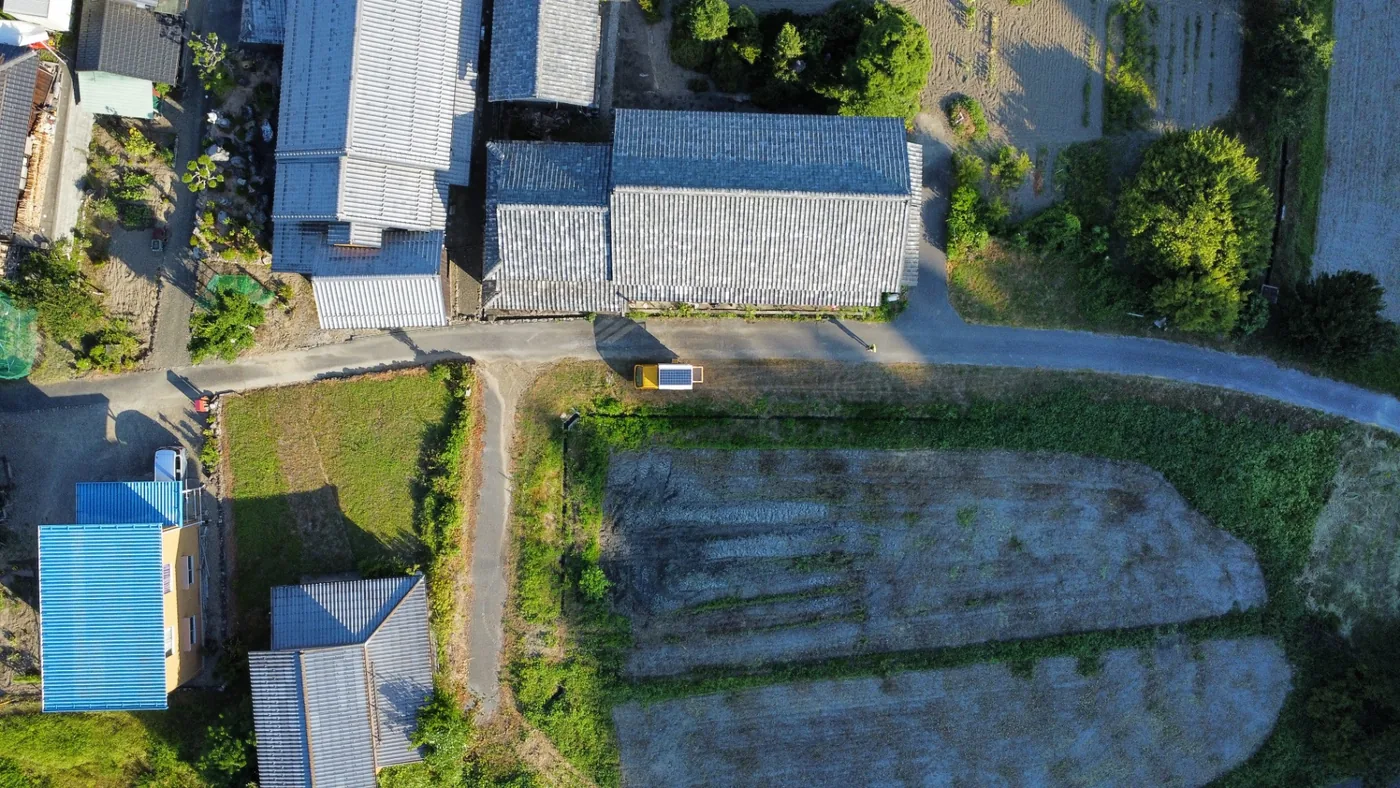
Tabisuru Makers Lab, which I've been building since April, was finally completed in July, and my “journey” has begun at last. For my first destination, I chose the Tane district of Nagahama, Shiga. It's a place I've been involved with since my first year of undergrad at Keio University, and where the Kobayashi Hiroto Lab, which I belong to, has a base.
I stayed in Tane for about a month, moving the workshop around and working on several projects. In this post I'd like to report on how it went, step by step.
1. Exhibiting at Cocorone Market 2026 Summer
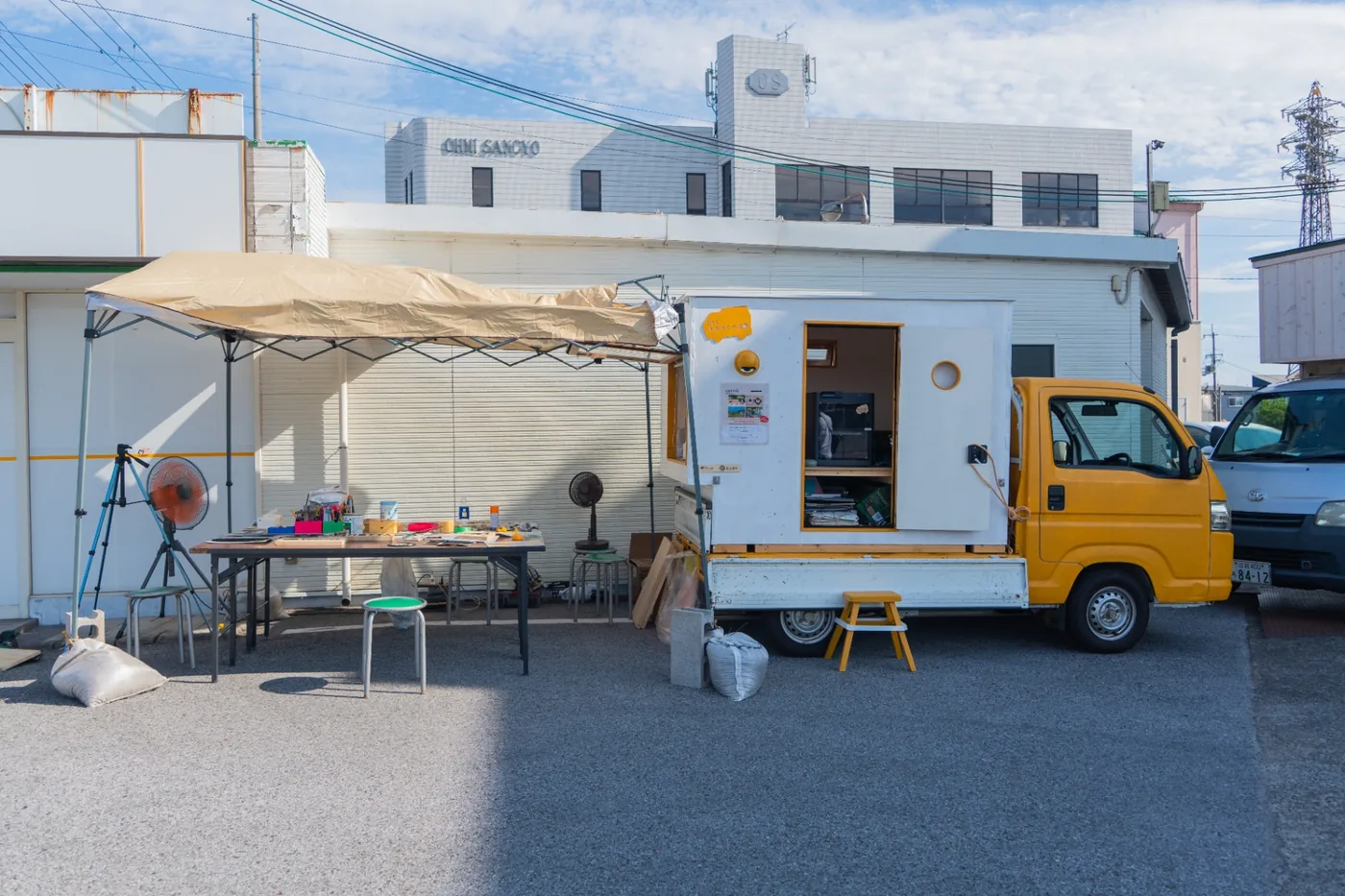
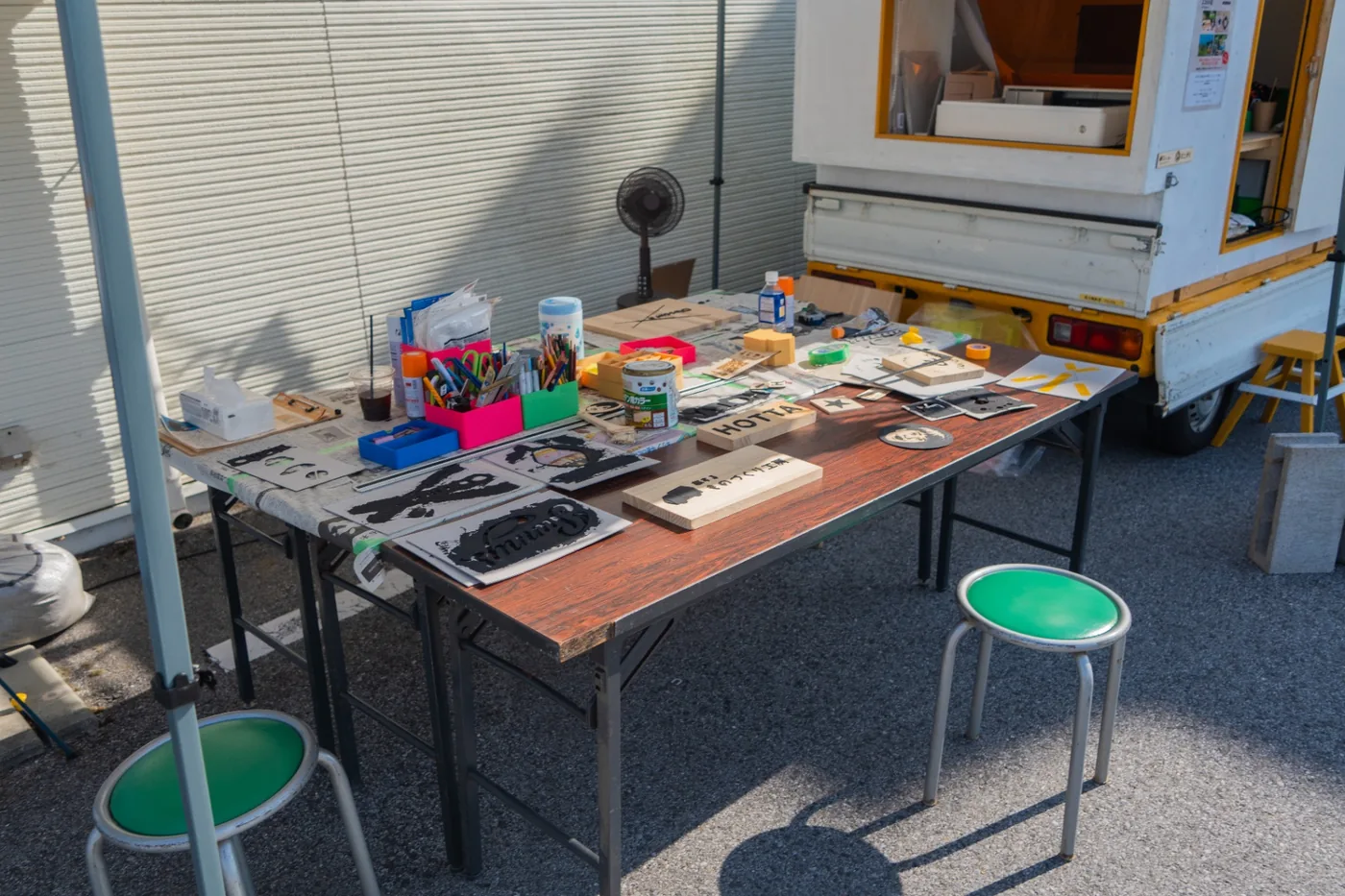
On July 26, Tabisuru Makers Lab took a stall at “Cocorone Market 2026 Summer,” held on the grounds of the houseplant shop “& COCORONE” in Nagahama. It was my first time exhibiting at an event. A food truck was parked next to us, and Tabisuru Makers Lab had a similar look — it really felt like a “food truck for making things.”
Nagahama has a sightseeing area called “Kurokabe Square.” The name comes from the “kuro-shikkui” (black plaster) applied to the outer wall of the Kurokabe Bank (the former Nagahama branch of the 130th Bank), built in the Meiji era. White plaster was standard for Western-style buildings at the time, but this building was deliberately finished in black plaster. It was a special technique that took far more time and cost than white plaster, and it is said to have signaled to the local people, “This is a bank with the resources and dignity to be trusted with your money.”
So for this event, I planned a workshop making keychains and signs with this black plaster. I prepared several templates in advance with the laser cutter so people could make keychains on the spot. Participants could also try a PC themselves, create template data on the spot, cut it with the laser, and finish a sign with black plaster.
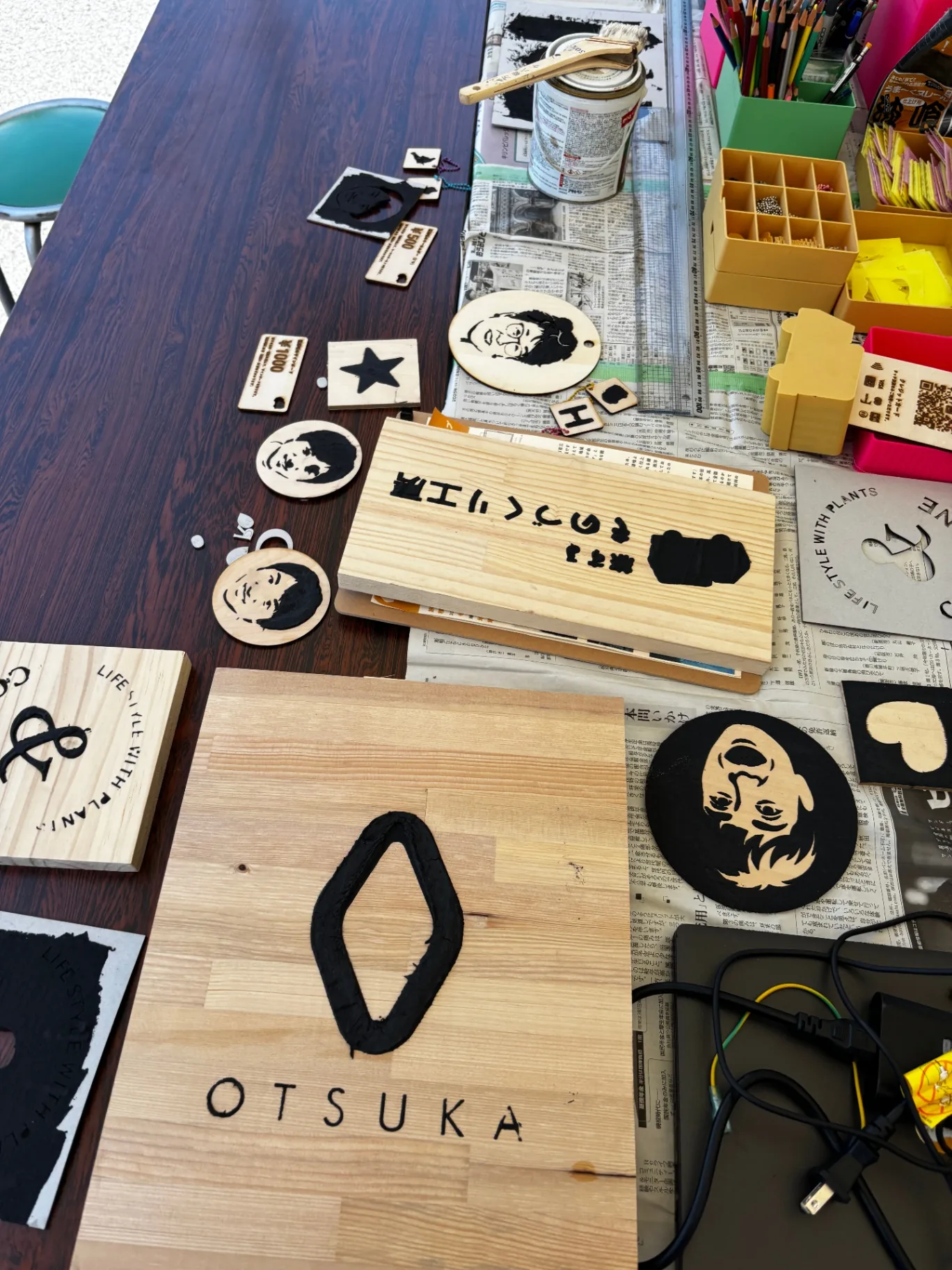
“Kurokabe” is a word familiar to local people. I hope it gave them a chance to think again about the meaning behind that “black.”
On the other hand, I also felt the limits of short, small-scale workshops like this. At one point someone asked, “Don't you have any colors besides black?” and I regret that I couldn't fully convey the meaning in the material and its connection to the community. (Perhaps I was also seen as “a shop that makes signs.”) To get people to think deeply about a community through making, I felt I need to design a somewhat larger-scale workshop.
Still, I clearly demonstrated that I can bring in a workshop loaded with 3D printers and laser cutters and hold a workshop on the spot, anywhere. I'd like to try out this possibility in many more places and communities.
2. Outreach Class at Nagahama City Tane Elementary School
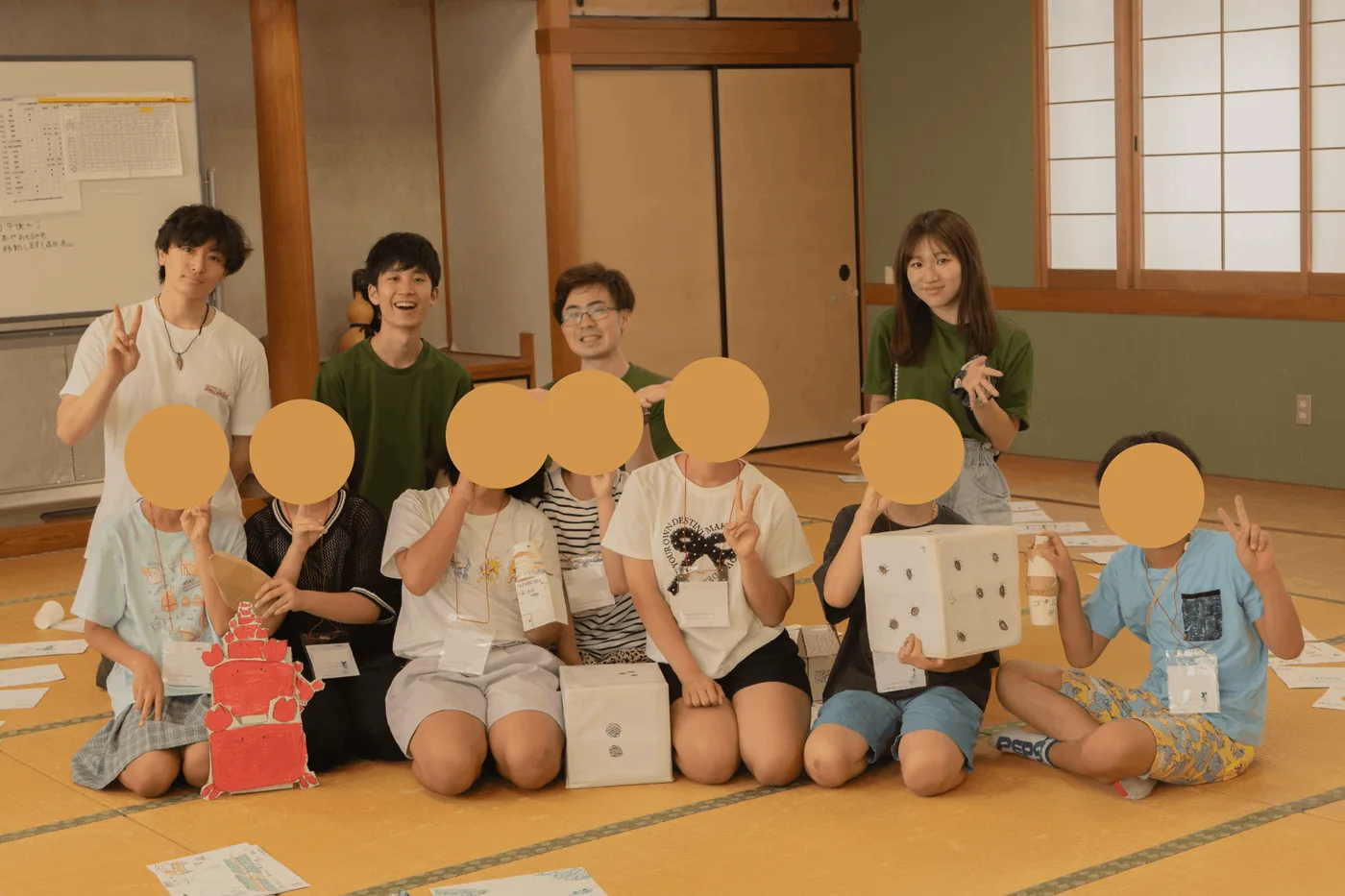
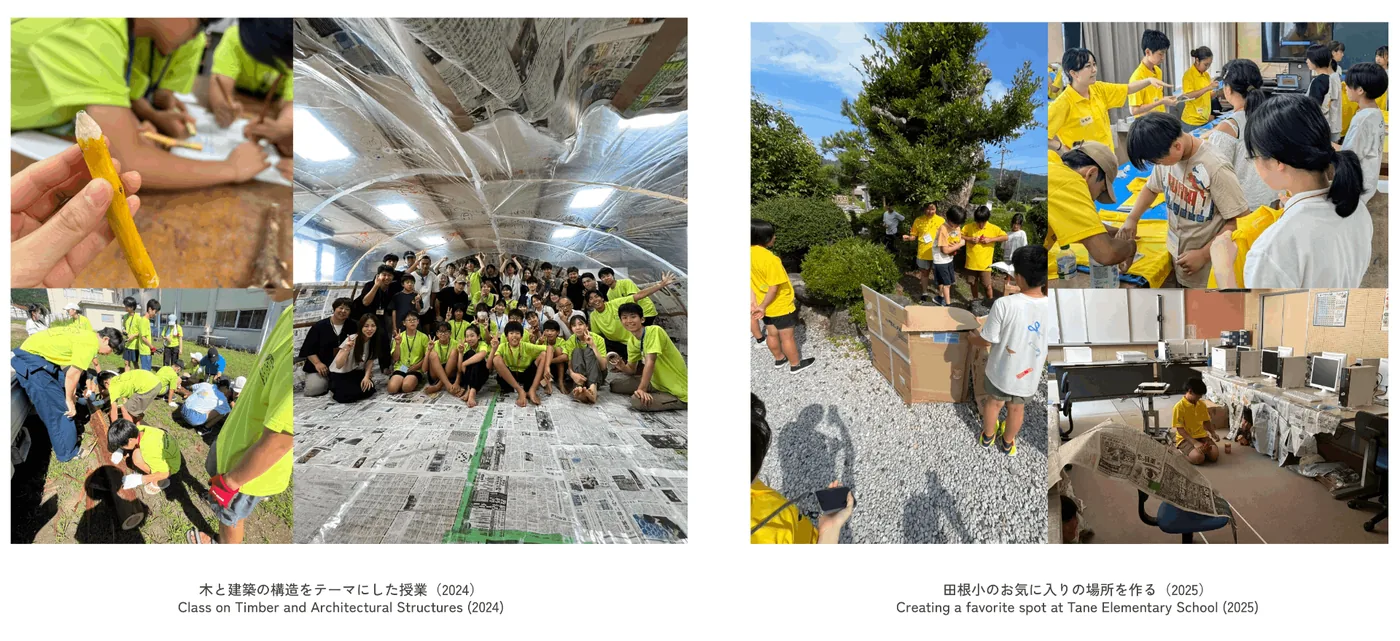
On August 3 and 4, we held an outreach class at Tane Elementary School. The outreach classes between the Kobayashi Hiroto Lab and Tane Elementary School have continued since 2023, and this was the fifth. So far we've held a class themed on “wood and the structure of architecture” and a class on “creating a favorite place at Tane Elementary.”
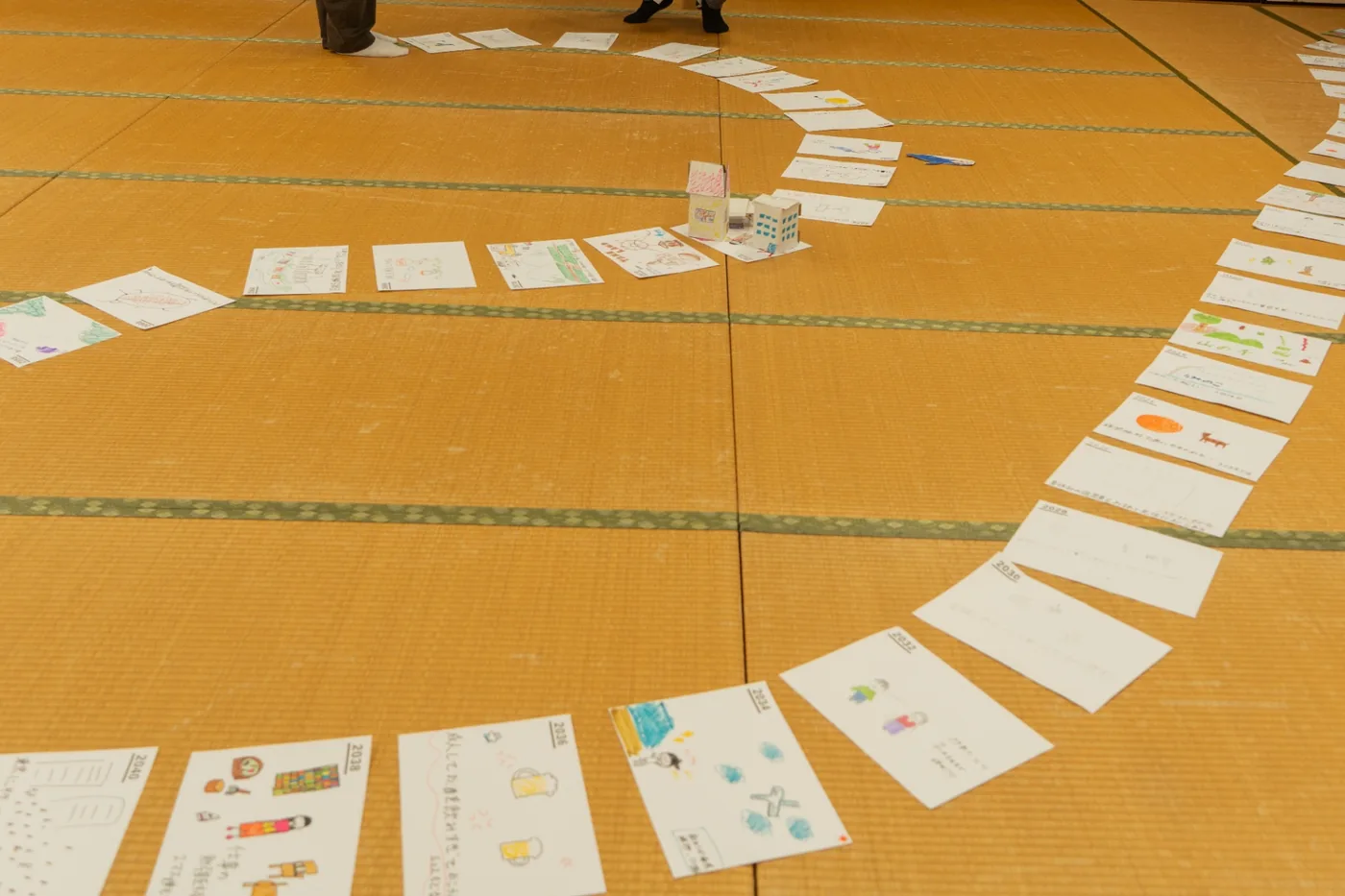
This year's theme was “Thinking about Tane's past and future through play.” We made a giant sugoroku board in which each square represents one year; each child took charge of a year they liked and expressed Tane's “past” and “future.”
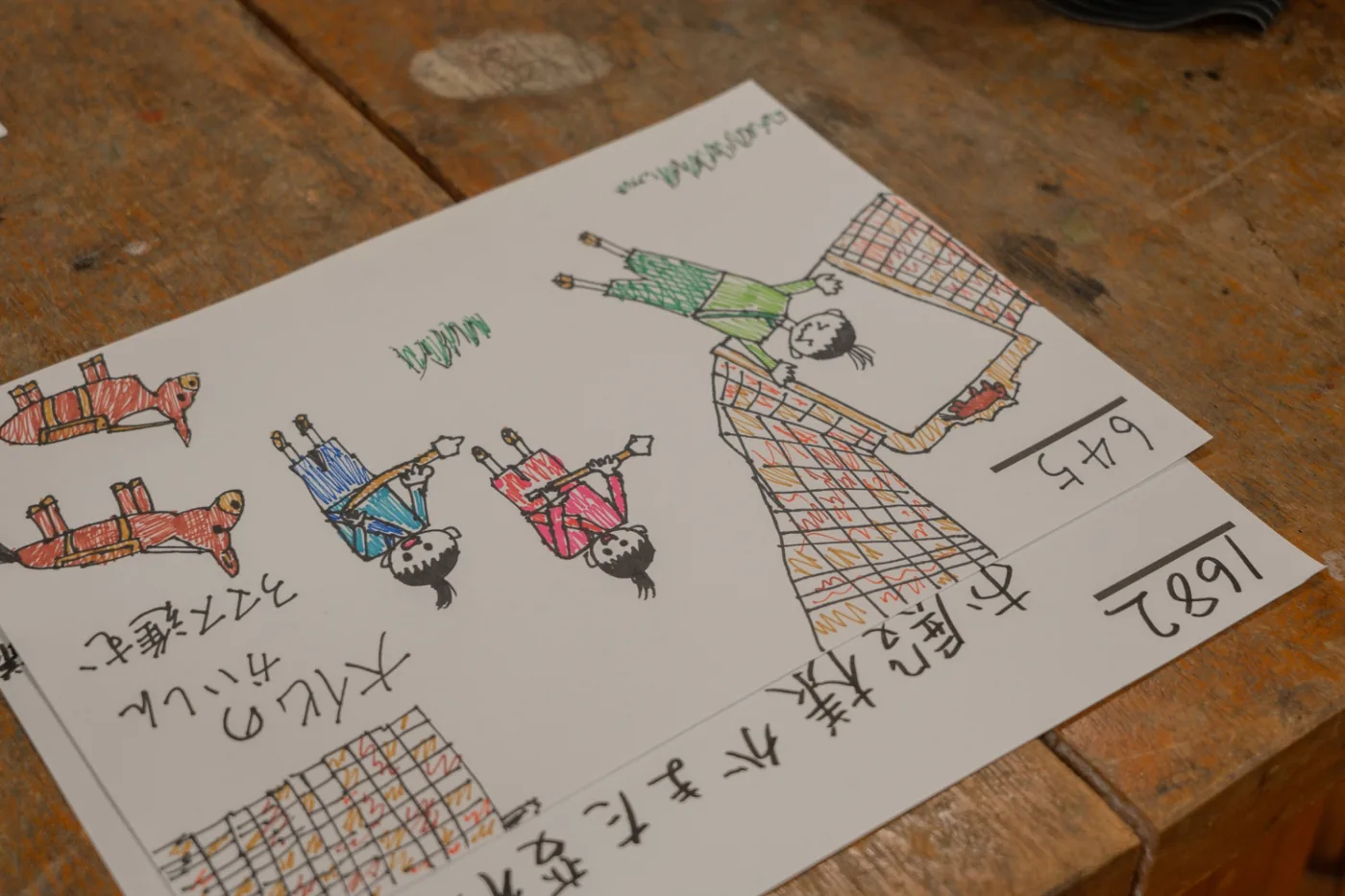
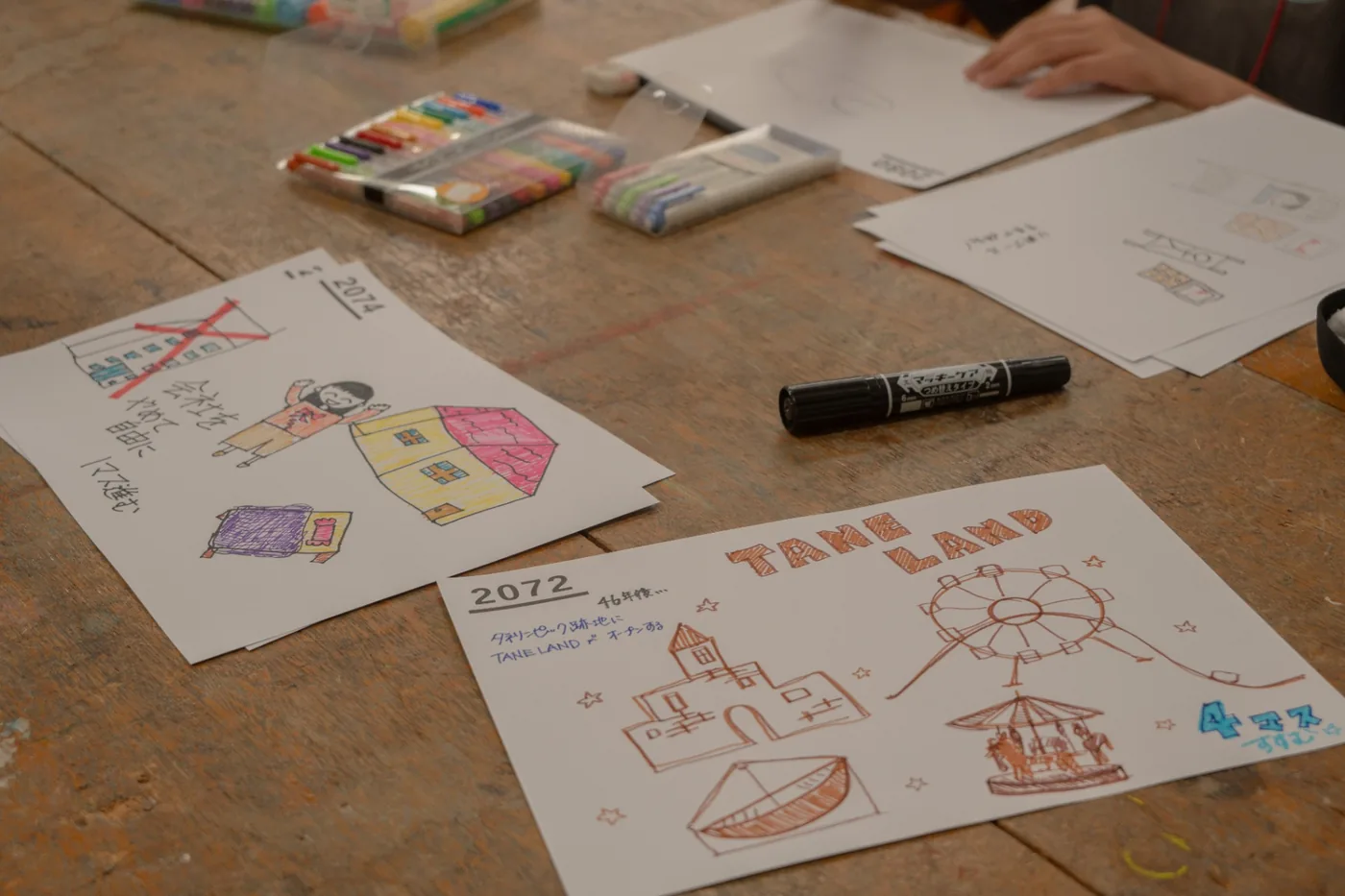
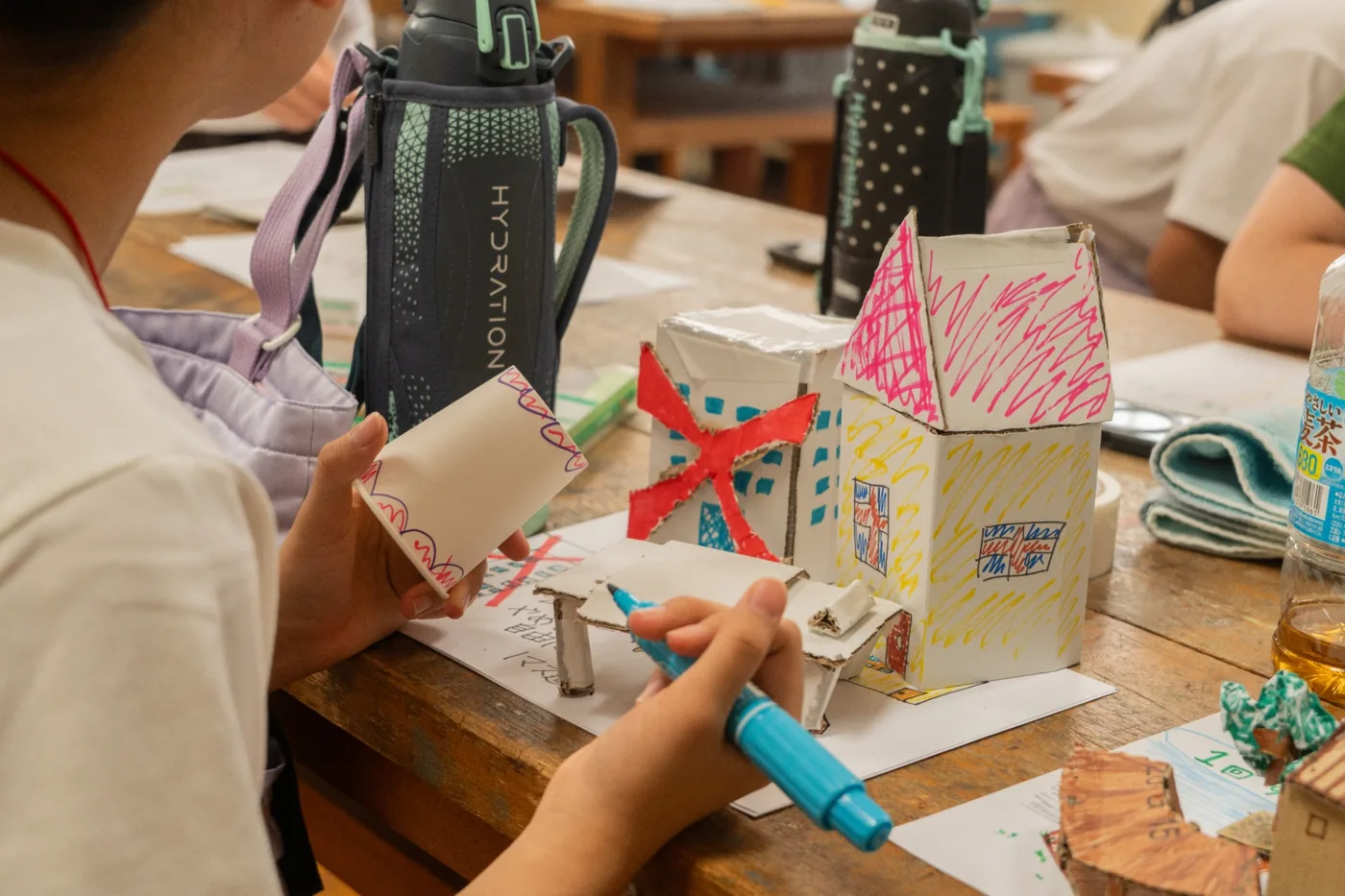
When you actually follow the finished sugoroku from the start, you can see what kind of futures the children imagine. I think it gave them a chance to think about their surroundings and the future through play.
3. International Workshop “MOKU 2026”
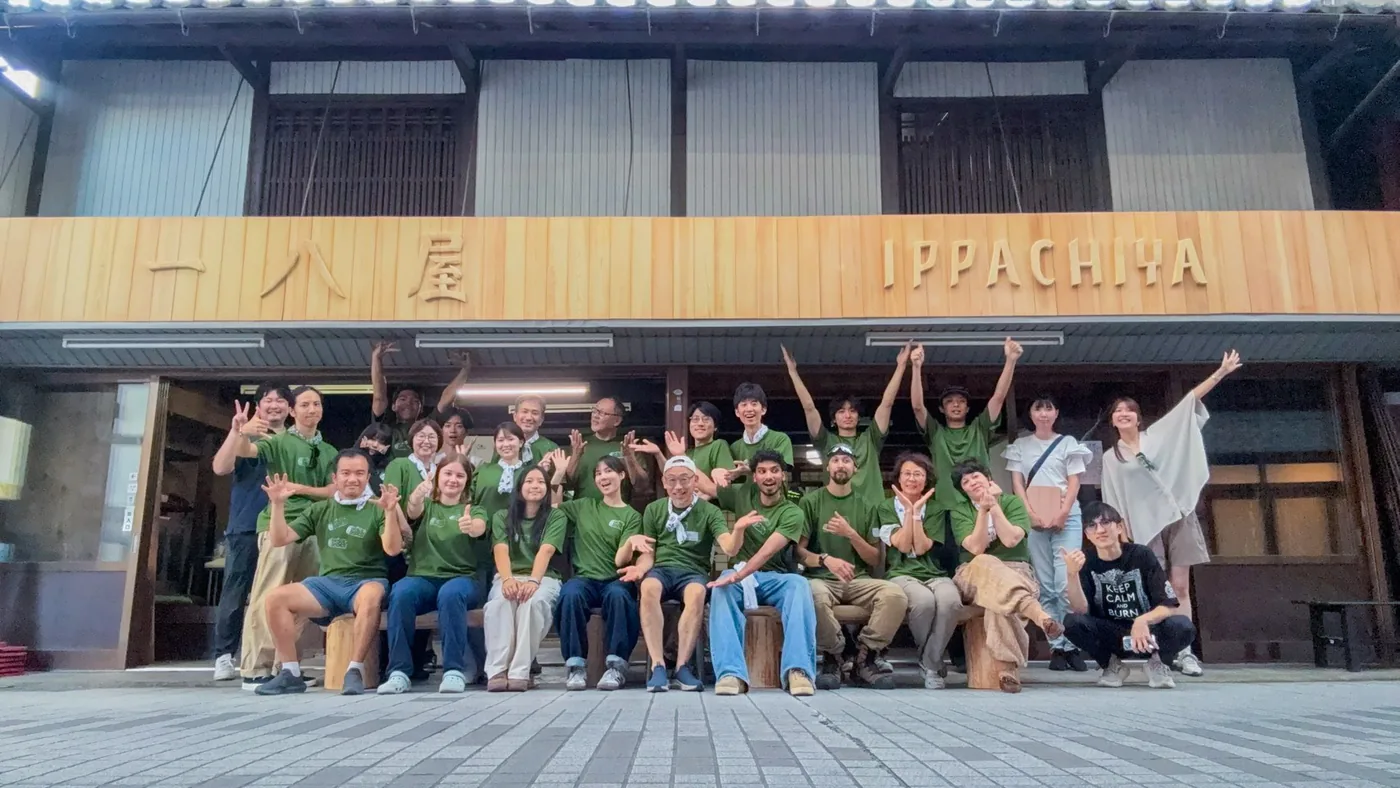
From August 5 to 15, we held the international workshop “MOKU 2026.” Ten participants from eight countries, aged from their teens to their 80s, stayed in Tane and Nagahama for ten days to learn about forestry, architecture, and daily life in Japan.
The Kobayashi Hiroto Lab has been active in the Tane district since 2007. As Professor Kobayashi retires from Keio University, we thought about how to carry on our projects, and established Co-Build Lab, a general incorporated association. MOKU is also Co-Build Lab's first initiative.
The program is broadly divided into two phases.
Phase 1: From the Forest to Daily Life
On August 6, we started with a tour around Tane and a lecture on Japan's forests and architecture. On the 7th and 8th, we actually went into the forest, felled trees, and used that wood to renovate an old house. Students from the local Torahime High School joined us for these two days.
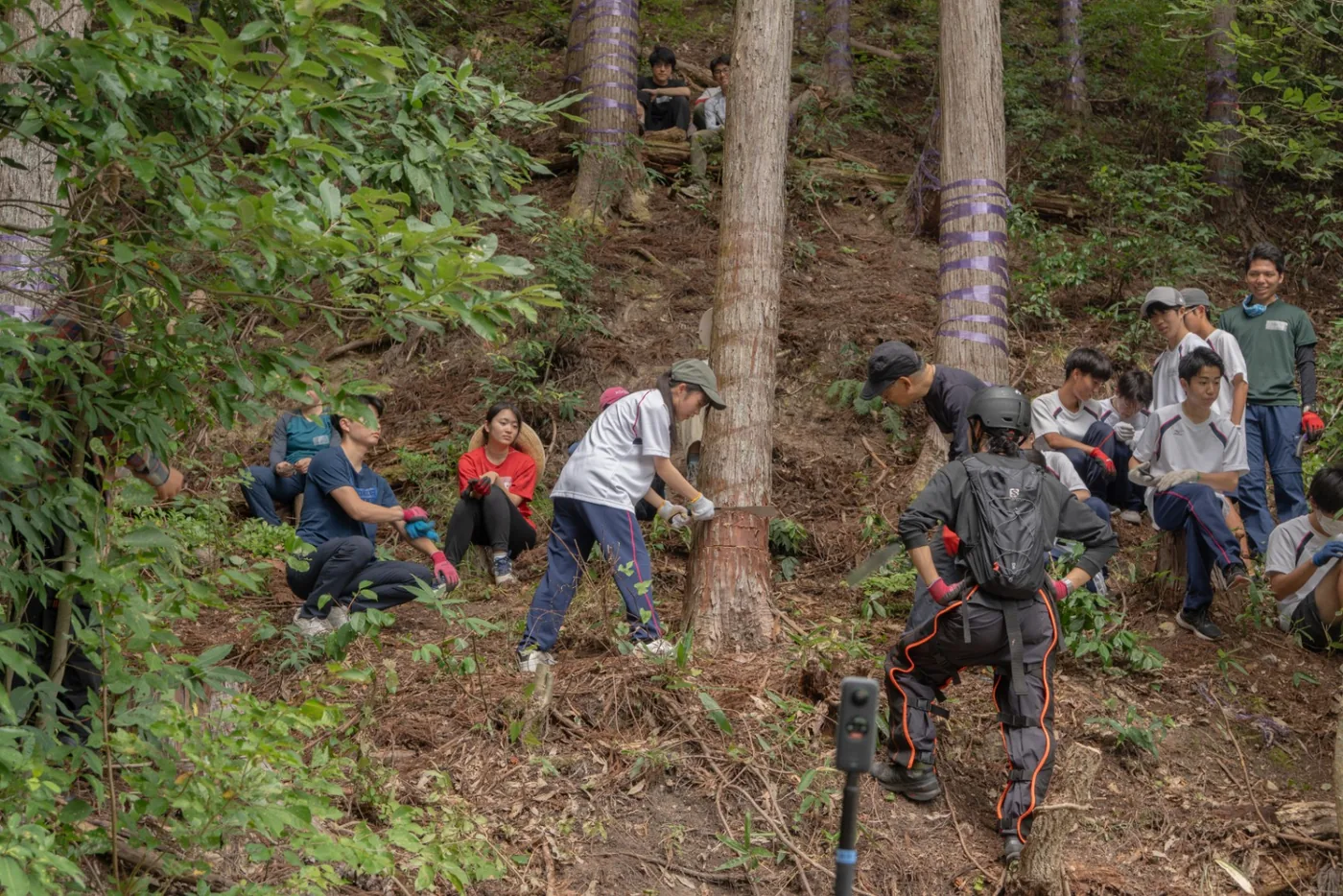
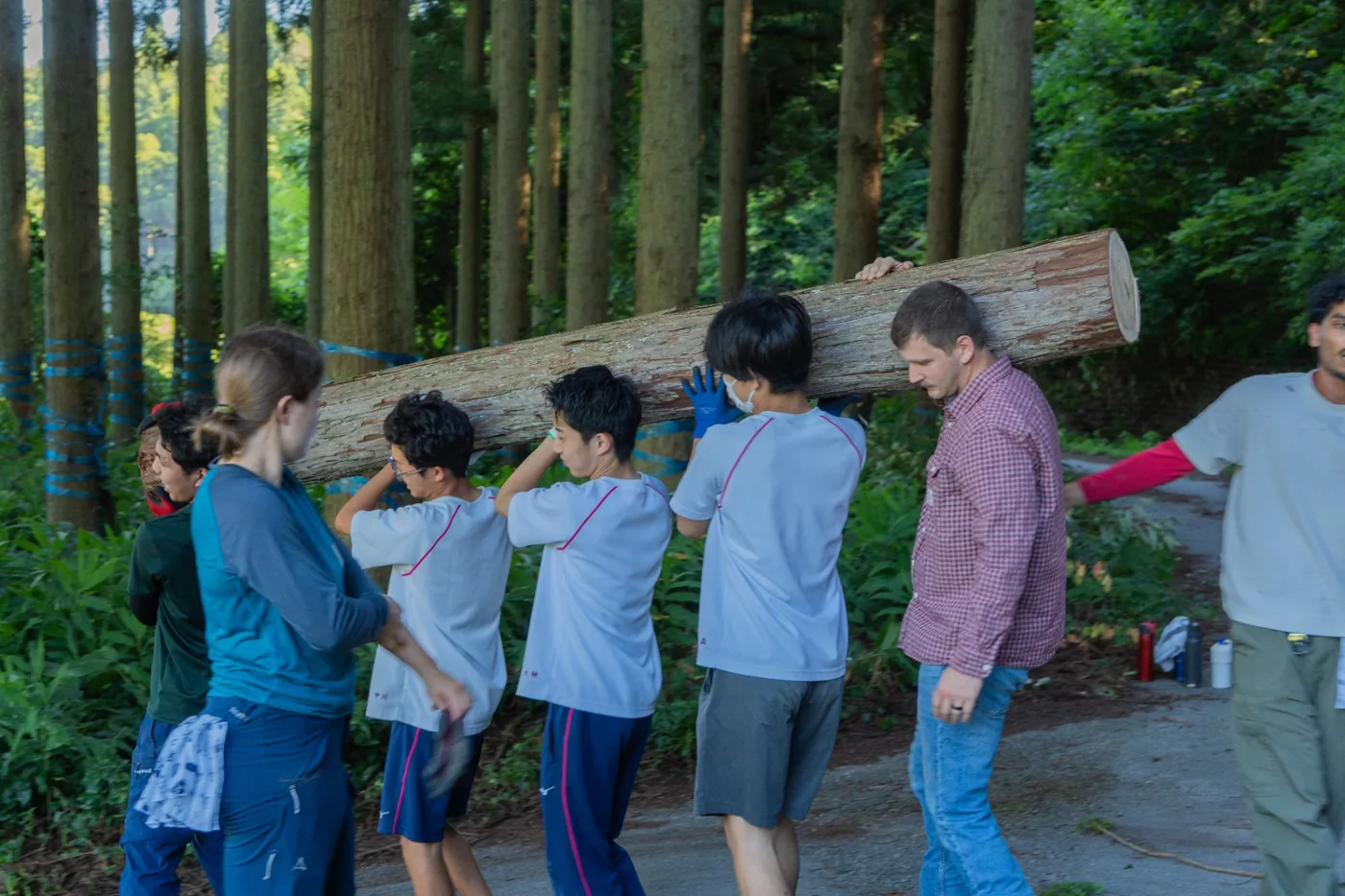
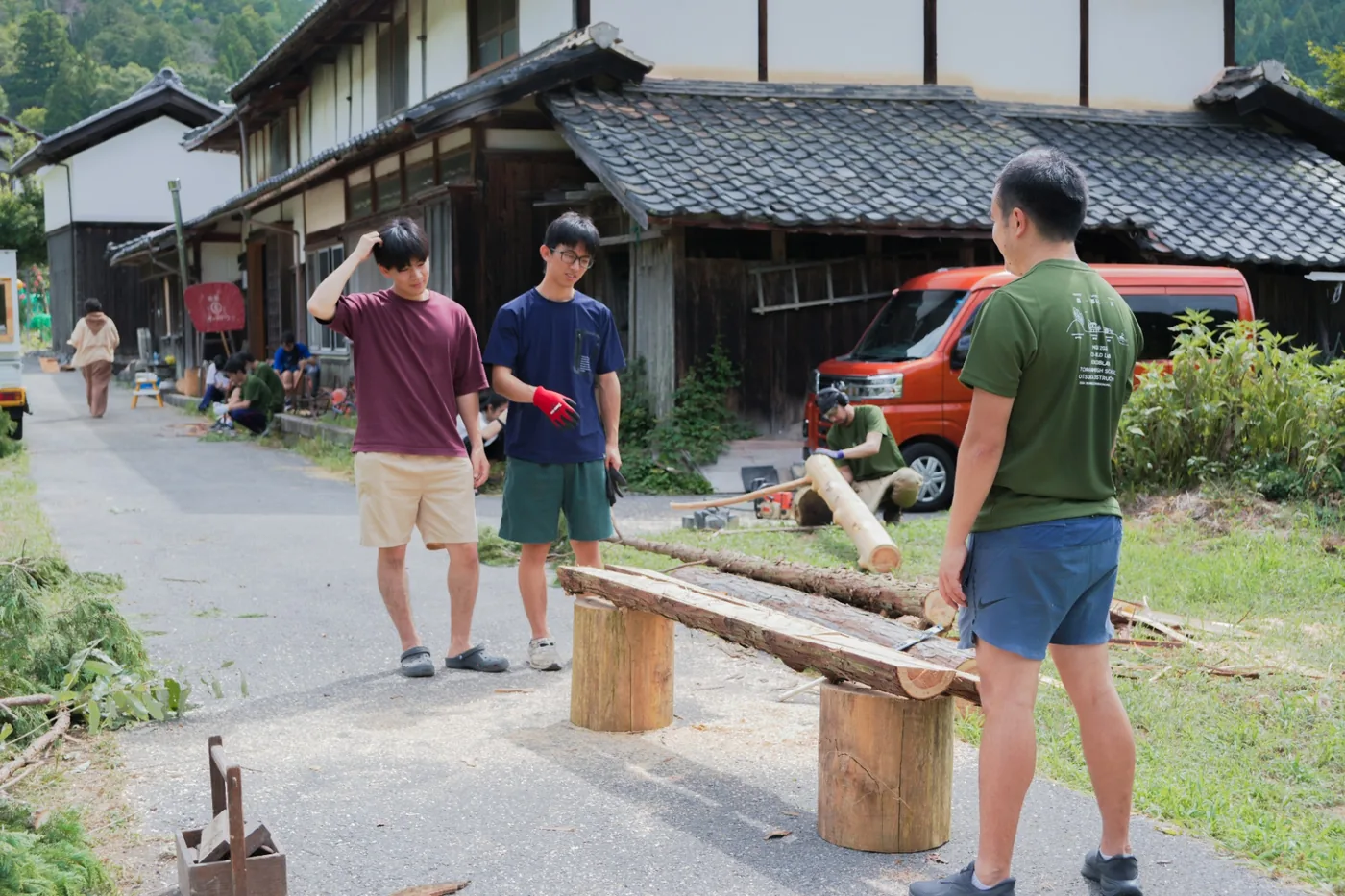
In everyday making, where we often use materials bought at hardware stores or pre-milled lumber, even if we know in our heads that wood comes from forests, it's hard to feel it. This time, by going to the forest, felling trees, and using that wood to renovate an old house, I think participants learned with their bodies where materials come from. The Torahime High School students told us, “I hardly ever get to talk with people from overseas, so it was a really valuable experience.”
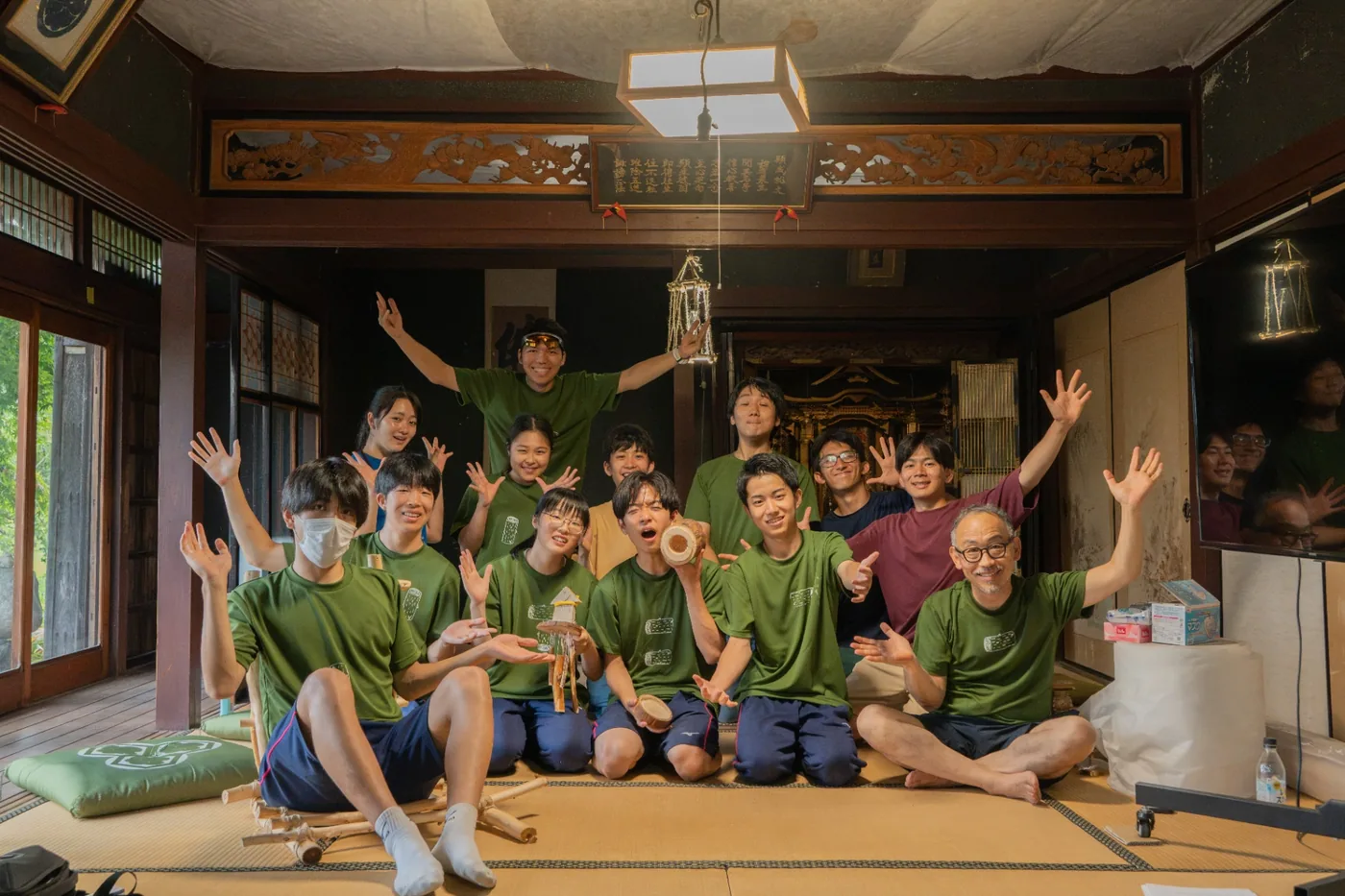
From the 8th to the 9th, five local families kindly hosted participants in homestays. On the 9th, we held a BBQ with local people at Tane-za Garden and presented the results of the outreach class and the workshop.
Phase 2: From the Forest to the Town
From the 10th to the 14th, in collaboration with Otsuka Construction in Nagahama, we worked on renovating a vacant shop in a corner of Kurokabe Square.
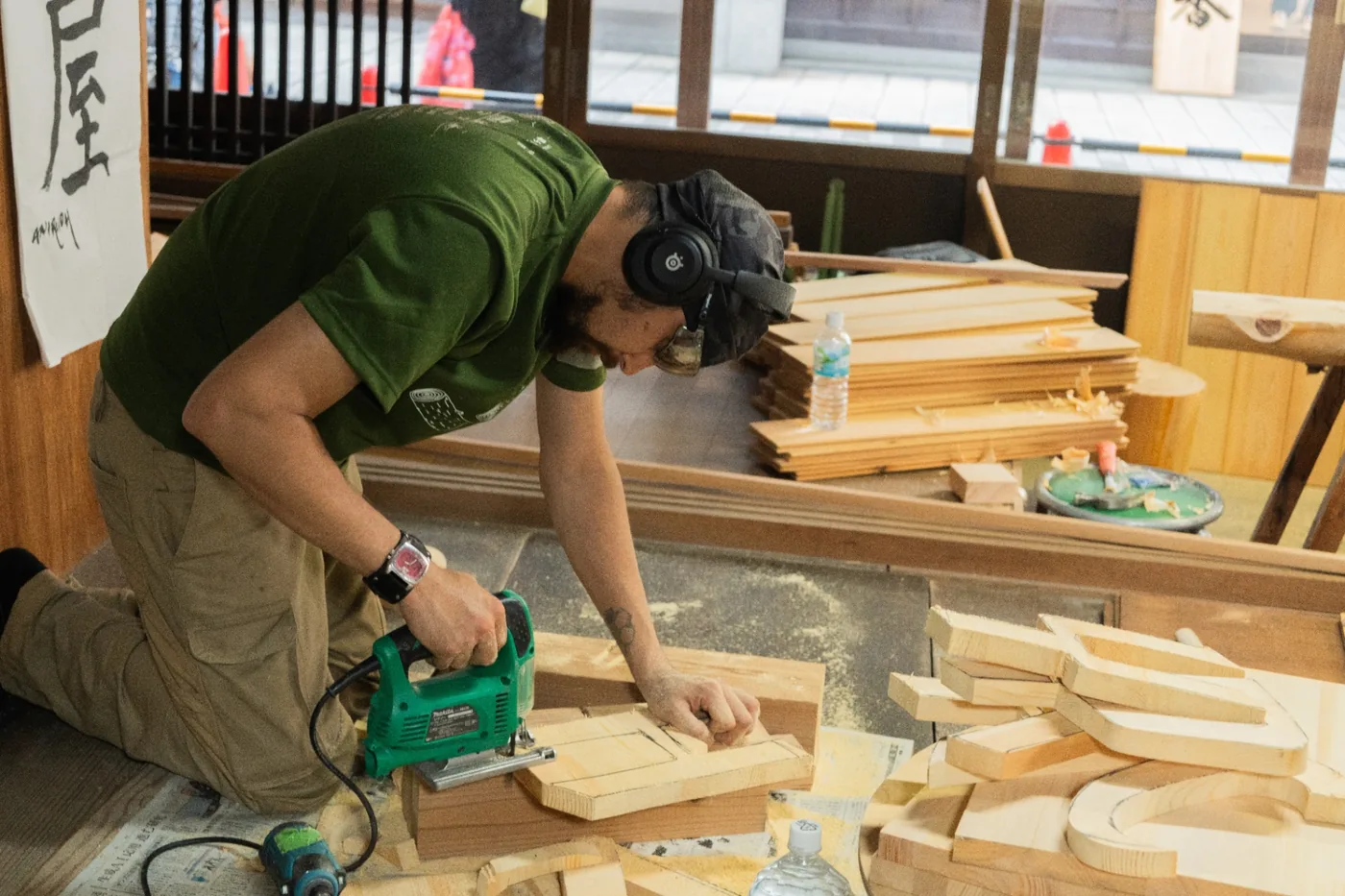
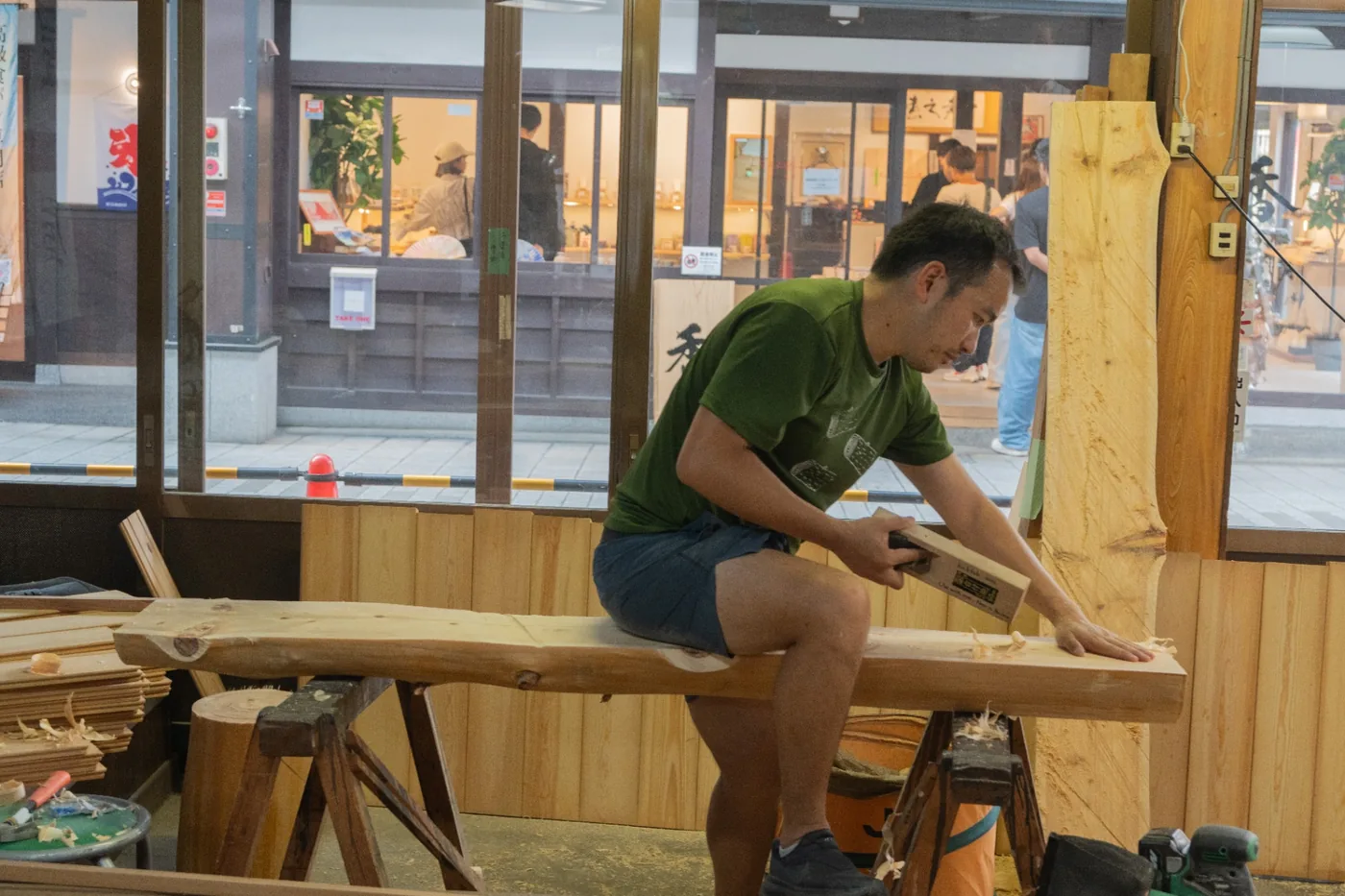
At first, we planned to think about “what kind of space this place needs” through fieldwork in the Kurokabe area, and to focus on making new things such as signs and benches. But the participants cared much more about “how to make the most of the space that's already here” than about adding something new. In this shop too, a wall added later on the street side had hidden the spacious tatami room and fine storehouse (kura) behind it. Out of the sentiment that this was a waste, and a wish to make the whole building visible from the street, we decided to focus on tearing down the existing wall and throwing open the shutter.
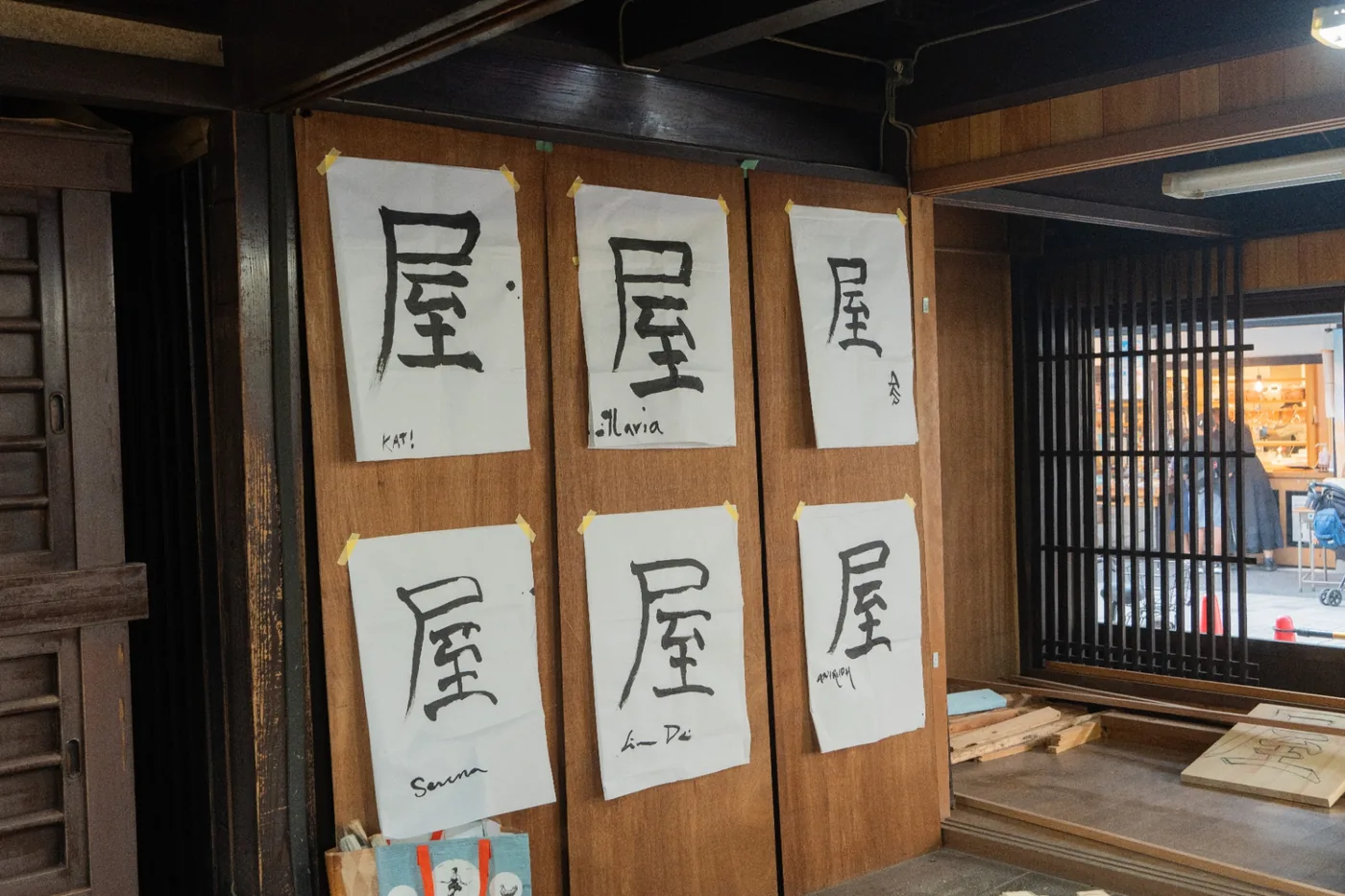
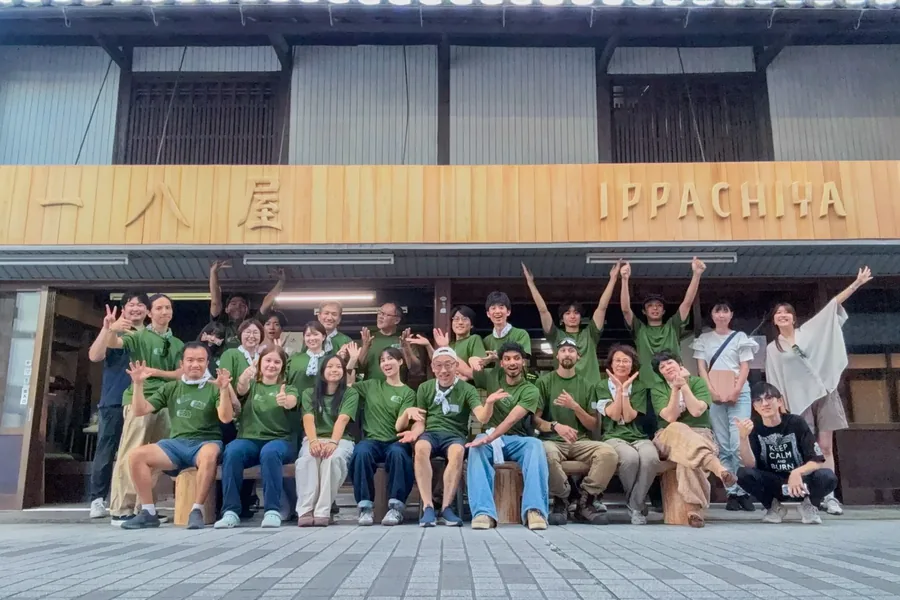
The shop is called “Ippachiya.” I was told this area was once beloved by local people and closely tied to the Nagahama Hikiyama Festival. Ippachiya had been shuttered for a long time, but by putting its sign back up, removing the wall, and opening it to the street, it felt as if a familiar scene for local people had shown its face again. The place itself wasn't reborn, and no new shop opened. Yet now that it has a face toward the street, people naturally begin to picture what they'd like this place to become. We got to see that kind of change.
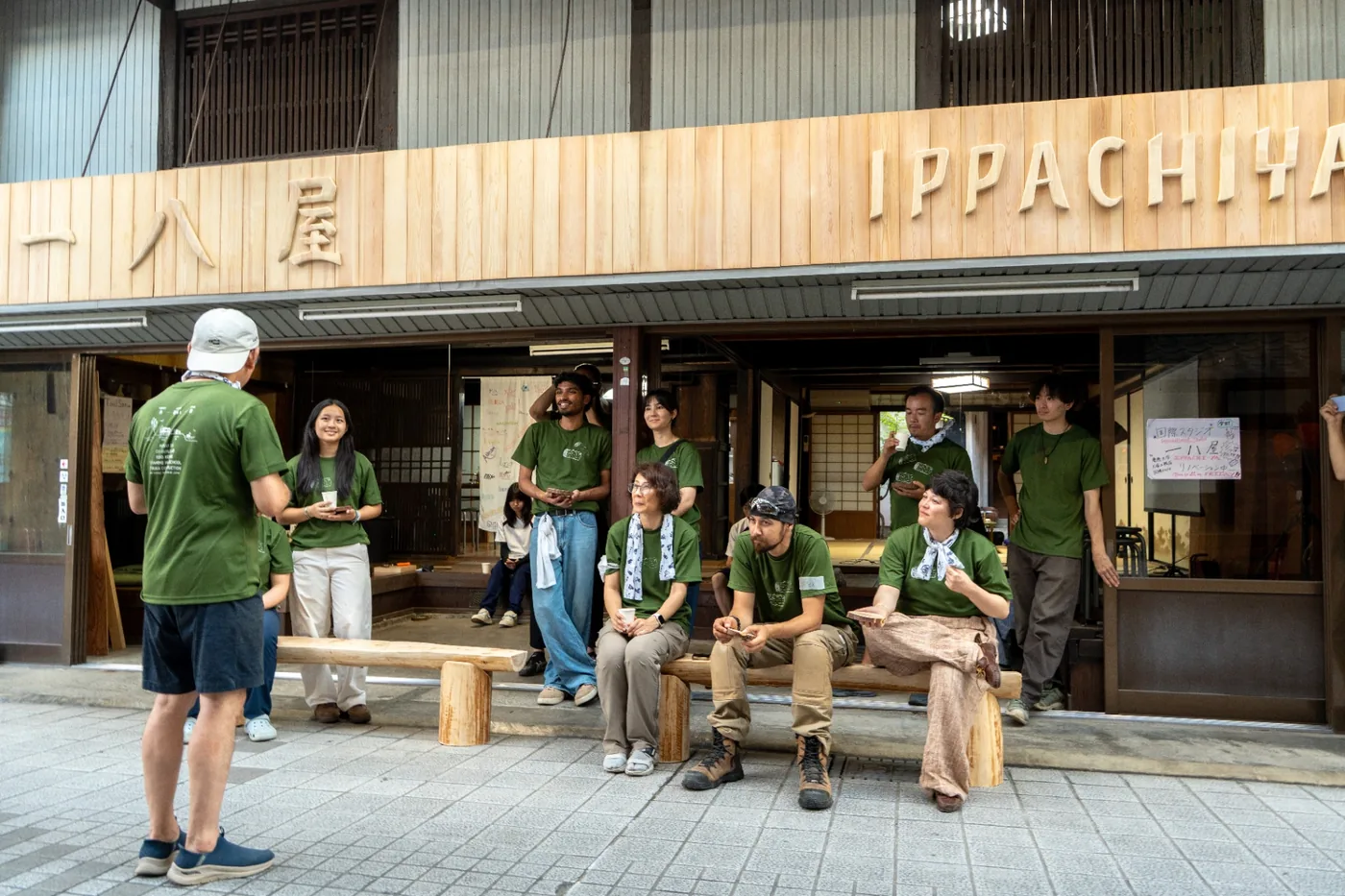
It was only about a week, but through this workshop I felt that it can become a trigger that gradually sets people's awareness, and the town itself, in motion.
This was the first international workshop. Our activity as a university lab has ended, but from next year on, I hope to continue it as Co-Build Lab, a general incorporated association.
In Closing
Over about a month, with Nagahama, Shiga as my stage, I ran several projects as Tabisuru Makers Lab, and as the Kobayashi Hiroto Lab of Keio University and the general incorporated association Co-Build Lab, which I belong to.
Nagahama and Tane are places I've kept visiting since my first year of undergrad — nearly five years now — and I feel deeply connected to them. When I entered this place again as Tabisuru Makers Lab, many people were interested and said, “We could do this and that.” I think people were able to feel the fun of Tabisuru Makers Lab itself, and the meaning of visiting a community. Tabisuru Makers Lab plans to keep traveling around. As I visit many places across the country, I'll keep sharing what I do, so please look forward to it. Thank you for your continued support.
Share or save this article